
★★★★★
Allowed My Business to Grow
"Om Data Entry India has allowed my business to grow 500% over the past 3 years! They really care about my company and they care about the quality work they provide!"

In today’s advanced era, data becomes the lifeline to almost every Industry and organization. The urge of clean, consistent, and properly maintained data is more essential than ever. With Data formatting services, any organization transforms raw data into a specific, structured format that is easier to edit, analyze, or store in databases and use as per project needs. However, traditional approaches to data handling require lots of manual work or rule-based automation, but in this modern digital world, Artificial Intelligence (AI) is reshaping data formatting and the ways of cleaning documents. These advanced solutions help businesses to grow and stay competitive in the market.
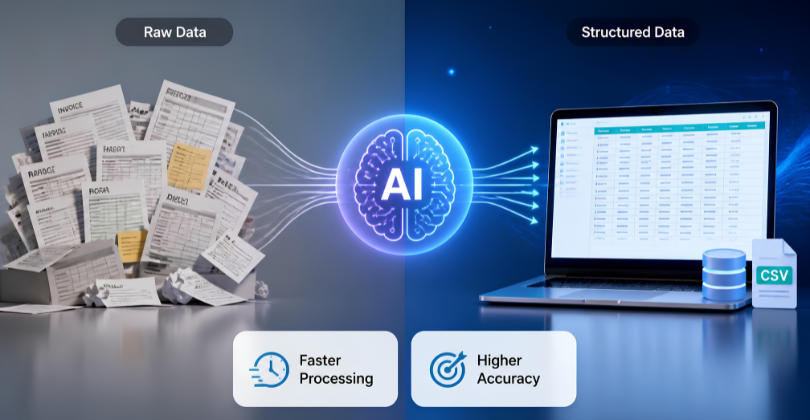
This blog will help us understand how AI will change data formatting services and some traditional approaches and their obstacles.
Before diving into the concept of AI and upcoming trends, it's important to understand the common hurdles that are associated with data formatting:
Inconsistency in data sources: Frequently, data comes from different sources like CSV files, PDF’s, databases, cloud, and more, which makes standardization complex and time-consuming. Inconsistencies in data can create misunderstandings and may take time and effort later to clear the mess. It is always better to use the best tools to keep the data formats consistent for easy application of information.
Scalability issues: Traditional data formatting is slow in processing and takes more time. The lack of flexibility in scaling usually leads to inconsistent results, delayed decision-making, and higher operational costs, which affect an organization's goodwill.
Data quality result: If the final output is not up to the mark, then the whole data becomes meaningless and unreliable. Poor-quality data such as missing values, duplicate entries, or inconsistent units can easily mislead formatting workflows, which can lead to inaccurate outputs. These challenges require more adaptive technologies and intelligent approaches towards data formatting.
Artificial Intelligence is changing the world rapidly; data formatting is not an exception. Here are the points that refer to the change of data formatting with AI:
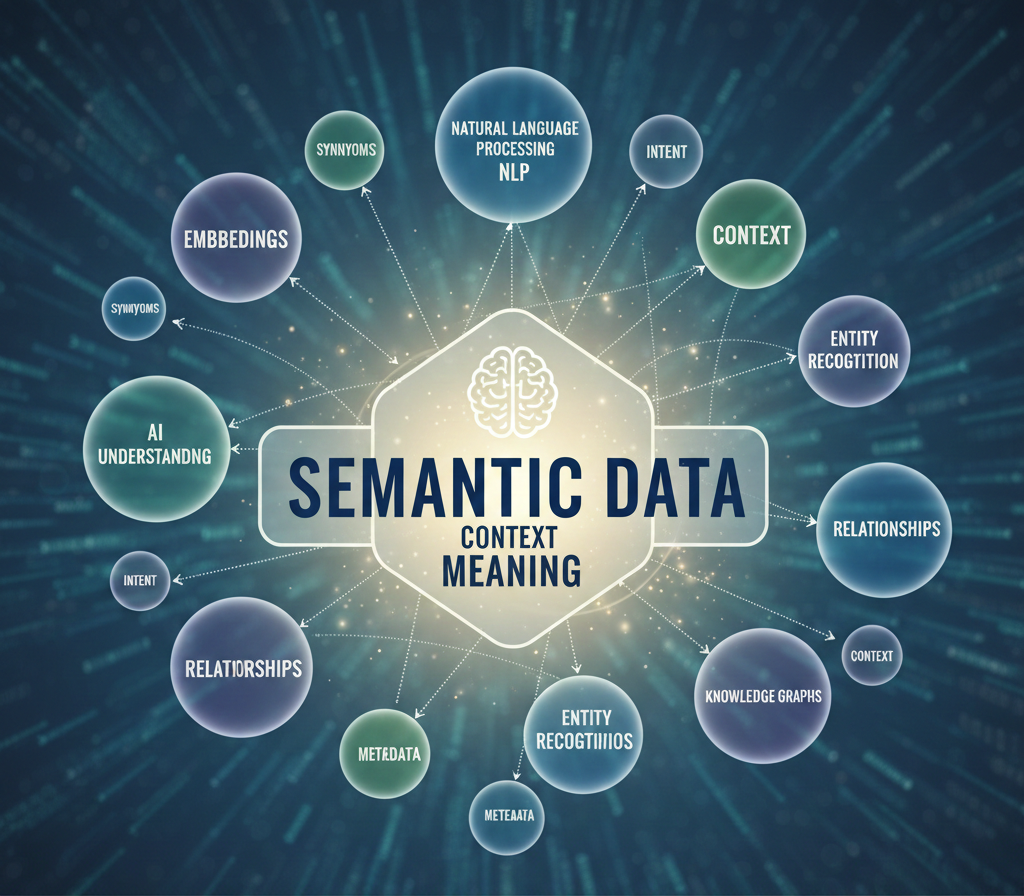
Previously, systems were heavily dependent on static validation, which created confusion and poor data handling. AI-powered error detection under data formatting services is transforming how data services manage data accuracy and consistency; advanced AI systems can also auto-correct errors by suggesting or applying fixes based on learned patterns and recognizing semantic data models.
AI systems continue to learn from data patterns and can detect inconsistencies or errors in real time. These systems use special algorithms to identify issues like duplicate records or missing fields, it also boost data processing and ensure high-quality work, which enhances decision-making and success.
The evolution from rule-based formatting to intelligent automation has a great impact on how data is processed and presented. Traditional data processing heavily depends on predefined systems and logic. In contrast, Intelligent automation, powered by AI and machine learning tools, goes beyond rigid rules, helping data formatting in multiple languages and reducing the chances of error during the cleaning process.
With the rise of industry-specific large language models (LLMs), the process of formatting data for any sector will become increasingly automated and accurate. These AI systems will be pre-trained on domain-relevant data, allowing specifications to be understood, compliance rules (like HIPAA or GDPR), and industry-specific language with minimal human interference. It helps improve data efficiency and proficiency.
ETL processes required extensive manual coding and a lot of brainstorming, but with AI, this work is becoming smarter, faster, and more adaptive. Learning algorithms can automatically detect data schemas, match fields across systems, identify anomalies, and suggest or apply transformations. As a result, AI-driven ETL reduces development time and makes integration easy, even working with complex or high-volume projects.
Traditional data formatting heavily depends on manual processes and strict rule-based logic, where specified scripts and human correction are essential for managing raw data. In contrast, AI-powered data formatting services offer a smarter, more versatile solution that caters to almost every industry and organization.
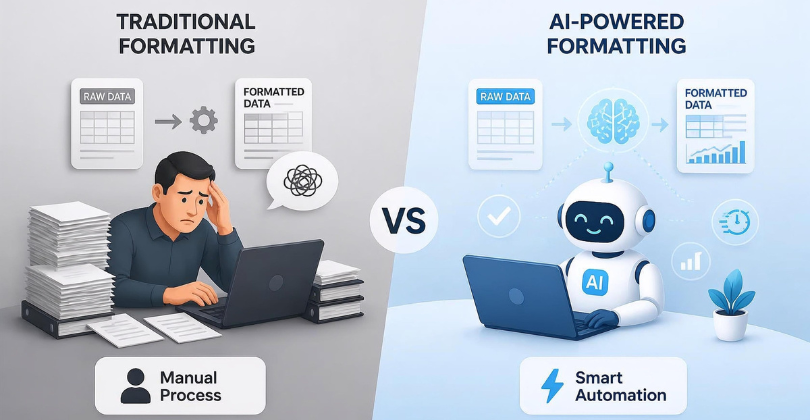
Advanced features can understand the context of data, identify patterns, and adapt in real time without human input and give high-quality returns.
Traditional techniques are often time-consuming, high-risk of errors, and more. Every time a new format or data source is introduced in databases, the system typically requires manual updates or reconfiguration, which makes the whole work even more challenging. By investing in AI-driven data and document formatting services, anyone can achieve maximum rate of success and focus on core business functions.
With the help of automated correction, businesses can build strong analytics and operations on trustworthy foundations.
With the help of modern AI features, managing and monitoring data quality is more reliable and effective for data formatting services.
AI, particularly Machine Learning (ML) and Natural Language Processing (NLP), can precisely understand context and make intelligent strategies.








Connect with Our Experts
Free Sample
|100% Secure Data
"Om Data Entry India has allowed my business to grow 500% over the past 3 years! They really care about my company and they care about the quality work they provide!"

"Om Data Entry India has been a huge asset for us, with their flexibility to demand and prompt availability."
GSTIN : 24BJMPK5188F1ZY
Om Data Entry India offers scalable and reliable data entry solutions to clients worldwide. As a trusted outsourcing partner, we provide customized cost effective services backed by a dedicated team of skilled professionals.